
A Simple Two‑Minute Reset for Everyday Stress
A recent article from Fit&Well outlines a short movement routine designed to break up long periods of sitting and help reduce the physical tension that often comes with daily stress. The piece links a national awareness day about stress with practical steps: instead of squeezing in a long workout, it recommends taking brief movement breaks during the day to ease stiffness and refresh your attention. The focus is on small, doable actions you can do anywhere, without special equipment.
The article explains that modern work often encourages long stretches of sitting — what health writers call a “sedentary” lifestyle, meaning you stay in one position for a long time. Sitting like that tightens the neck, shoulders, hips and lower back, and it can make stress feel worse because your body stays in a tense posture. The suggested reset aims to change posture, release tension and give you a short mental break so you feel less stuck and more ready to continue your day.
Instead of promising to fix every stress source, the article presents the reset as a helpful nudge: a two‑minute routine made of four 30‑second steps — shoulder release, chest opening, hip and back mobility, and a short pause to breathe and reorient. The point is not to replace therapy, long workouts, or sleep, but to offer a practical, repeatable habit that reduces physical discomfort and creates a small mental reset during busy days.
Why this matters for people managing stress
Short movement breaks change the environment your mind lives in. When you move, you interrupt the physical cues that tell your brain “work” or “worry” — tense shoulders, a hunched chest, a locked hip. Moving for just two minutes sends new signals: your breathing often slows, your posture improves, and your nervous system can shift from high-alert to more relaxed. These are low-cost wins that add up if you do them regularly.
This routine also shifts the way you think about stress management. Many people wait until they have a free hour to exercise or to “deal with stress.” That rarely happens. Using micro‑breaks makes stress management practical: it fits into meetings, commutes, or kitchen breaks. It doesn’t change the big drivers of stress (workload, relationships, sleep), but it gives you an immediate tool to reduce the physical impact of stress and to improve focus for the next task.
What to watch for: pay attention to how your body responds. If your neck or lower back hurts more after any move, stop and try a gentler version. Consistency matters more than intensity — two minutes several times a day beats one long session once a week for reducing daily tension. Also pair these moves with simple breath awareness: slowing your exhale by a second or two can increase the calming effect. If chronic pain or severe anxiety surrounds your stress, use these moves alongside professional care rather than as a sole solution.
A portable two‑minute movement reset you can use anywhere
Use this quick routine whenever you feel stiff, distracted or tense — it takes roughly two minutes and needs no equipment.
- Release your shoulders — Sit or stand tall, shrug your shoulders up toward your ears, then roll them back and down in a slow circle; keep breathing naturally and let any neck tension soften as you move for about 30 seconds.
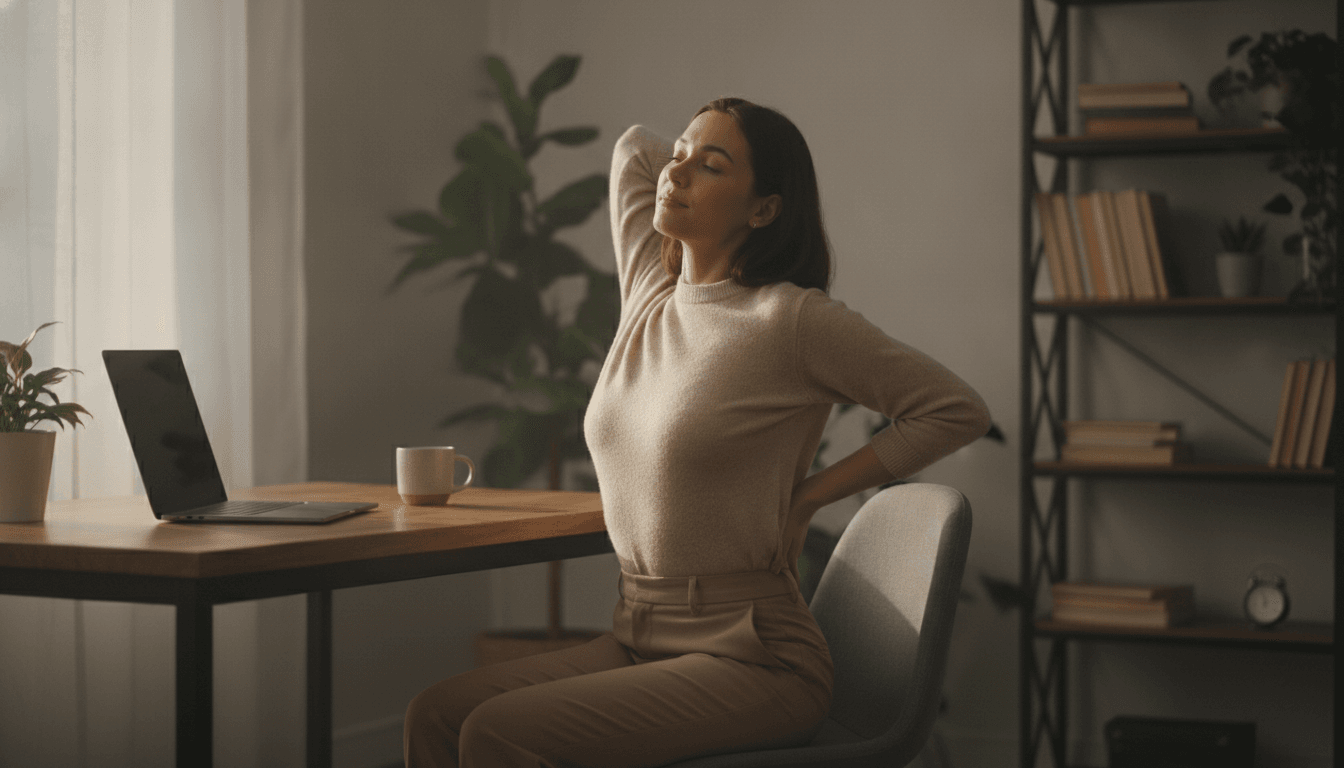
- Open your chest — Clasp your hands behind your lower back (or hold opposite elbows) and gently lift your chest while drawing your shoulder blades together; breathe open and feel the front of your torso lengthen for 30 seconds.
- Mobilise hips and back — From a seated or standing position, rotate your torso slowly side to side, or do gentle forward folds and hip sways to change how your lower back and hips feel; move with control and keep it relaxed for 30 seconds.
- Take a calm reset — Stand or sit quietly, soften your shoulders, and take three slow breaths in and out, letting your exhale be slightly longer than your inhale; use this pause to notice how your body feels before you return to work for 30 seconds.
Disclaimer: This article is for informational purposes only and is not a substitute for professional medical advice. Always seek your doctor’s advice with any questions about a medical condition.