




Why everyday overwhelm spikes and what actually helps
A recent article from a popular wellness outlet lays out why many people feel on edge and offers 18 quick, usable tactics to steady the nervous system. It notes that modern life—constant news, economic stress, personal setbacks—pushes many adults into a near-constant state of high alert. A major survey cited in the piece found that a large portion of people rate their stress very high and report they did not get enough emotional support last year.
The article explains how the body reacts to stress: the brain signals danger, the body releases hormones such as cortisol, breathing gets shallow, muscles tighten, and attention narrows to perceived threats. Cortisol plays a useful short-term role (it helps you respond to real danger), but when it stays elevated because stress never resolves, it harms sleep, mood, and energy. The write-up emphasizes that these biological responses evolved for physical threats, not for modern problems like an angry email or a scary headline.
To interrupt that reactive loop, the piece groups simple, evidence-backed techniques into categories: breathing practices, short bursts of movement, sensory grounding, cold exposure, distraction tactics, short social check-ins, and brief cognitive tools borrowed from therapy. The core message: when you can’t change a stressor, you can still send your body new signals that say “I am safe enough to slow down,” and that shift often works within seconds.
How these tactics change what you should do when stress hits
These strategies push a clear practical point: short, repeatable signals beat one-off heroic efforts. Deep breathing or a two-breath sigh works because these actions physically change your breathing pattern and nervous system state. That means the best approach for managing sudden overwhelm is to have a small toolkit you can use automatically, not to wait until you’re already spiraling and try to remember advice while feeling flooded.
Practice strengthens the effect. Doing a breathing exercise or a grounding routine a few times a day trains your body to associate the action with calm. The next time stress flares, your body recognizes the signal faster and downshifts more easily. So treat these techniques like muscle memory: rehearse them when you feel okay so they work when you don’t.
Also, personalize your choices. Scents, movement, or distractions that work for one person may irritate another. Test options for a few days and keep what reliably reduces your tension. Finally, remember limits: these tactics work well for everyday acute stress, but persistent high anxiety, panic, or depressive symptoms need trained clinical support and a plan that addresses sleep, chronic stressors, and long-term recovery.
Quick tools to stop a meltdown before it starts
Use these short, practical resets—practice them when calm so they work faster under pressure.
- 4-7-8 breathing — Inhale quietly through your nose for 4 seconds, hold for 7, then exhale through your mouth for 8; repeat to slow your heart rate and signal safety to your nervous system.
- Cyclic sigh (double inhale) — Take one full inhale, then a small second “sip” of air, and exhale slowly; this fills your lungs more fully and often drops anxiety faster than a single deep breath.
- Movement reset — Stand up, shake your arms, or walk for five minutes; brief physical activity discharges built-up tension and changes your mindset without needing a gym.
- 5-4-3-2-1 grounding — Name five things you see, four you can touch, three you hear, two you smell, and one you can taste; shifting attention to the senses stops rumination and brings you back to the present.
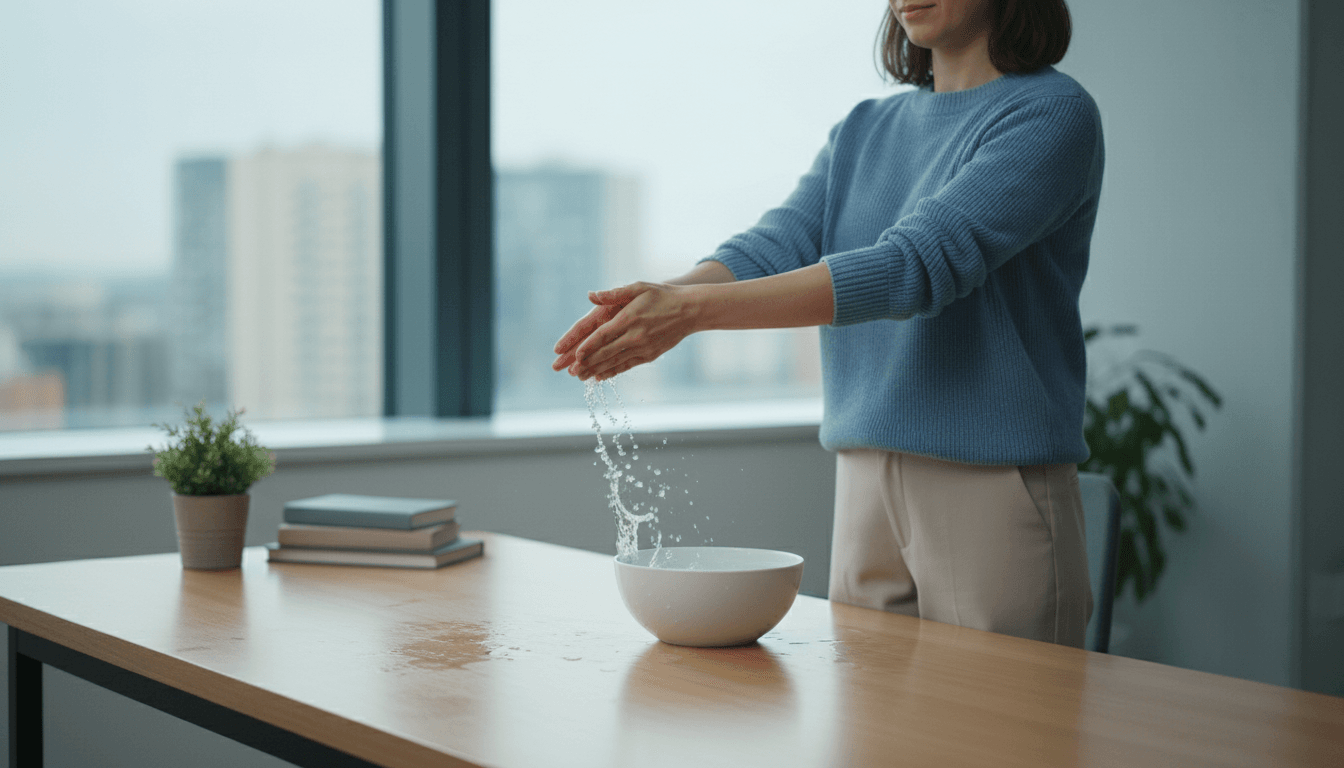
- Cold snap — Splash cold water on your face or press an ice cube to your wrist for 20–30 seconds; sharp cold sensation pulls attention out of panic and releases alertness chemicals that help you reorient.
- Best/worst/most likely — Write the best possible outcome, the worst possible outcome, and the most likely outcome of a stressing situation; putting probability next to worry often shrinks catastrophizing and clears a path for practical next steps.
Disclaimer: This article is for informational purposes only and is not a substitute for professional medical advice. Always seek your doctor’s advice with any questions about a medical condition.
SOURCE: https://www.oprahdaily.com/life/health/a73218959/stress-reduction-ideas/